Scott Dadich
Few modern figures have shaped the intersection of design, technology, and narrative with the discipline or the imagination of Scott Dadich. A former magazine editor turned design entrepreneur, Dadich has spent the better part of three decades translating complexity into cultural clarity. In 2017, he co-founded Godfrey Dadich Partners (GDP), which became a go-to advisor for companies navigating brand transformation and cultural relevance. Over the years, GDP’s client list has included Apple, Netflix, Google, Sony, Microsoft, IBM, JPMorgan Chase & Co., Amazon, Nike, TED, Red Bull, and the Obama Foundation—names that speak to both the firm’s influence and Dadich’s standing as a trusted partner to leadership at the highest levels.
Dadich’s philosophy, known as The New Editorial, fuses journalistic rigor with brand strategy and design as a tool of strategic intent. It is equal parts newsroom and boardroom: a way of framing companies not merely as institutions, but as narratives in motion. The model earned him a reputation for helping executives find not only their voice, but their advantage.
Before his foray into consultancy, Dadich served as creative director of Texas Monthly and later as both creative director and editor-in-chief of Condé Nast’s WIRED, where he presided over a renaissance of the magazine’s digital presence and editorial ambition. During his tenure, WIRED received 21 National Magazine Award nominations and eight wins, including four National Magazine Awards for Design. It was under his watch that WIRED launched its first iPad edition and featured rare dual interviews he personally conducted with President Barack Obama, while in office, and Edward Snowden, in exile in Moscow—illuminating two poles of the modern privacy and power debate. In 2011, Fast Company named him one of the “50 Most Influential Designers in America,” and in 2020, he was awarded the National Design Award for Communication Design by the Cooper Hewitt, Smithsonian Design Museum—the field’s highest honor.
During his WIRED tenure, Dadich was also appointed vice president of editorial platforms at Condé Nast, where he led the company’s first integrated strategy across web, smartphone, and tablet publishing. He oversaw the development of digital products and responsive experiences for flagship titles including GQ, The New Yorker, Vanity Fair, and Vogue, advancing a new model of nonfiction storytelling that united design systems with emerging technologies. Apple was a key partner in this work—collaborations that would quietly help inform the launch of Apple News and News+, both of which debuted with WIRED and Condé Nast as featured launch partners. His leadership helped position the storied publishing house at the forefront of the internet era.
Beyond page and platform, Dadich has translated his narrative philosophy to the screen. Abstract: The Art of Design—the Emmy-nominated, 14-episode Netflix series he created and executive produced—spanned two seasons and won the prestigious International Documentary Award for Best Episodic Series in 2019. Profiling some of the world’s most innovative creators, Abstract cemented Dadich’s role as a cultural intermediary between industry and imagination—a translator of creative process, not just output. Recent documentary work includes a 2024 campaign film for Vice President Kamala Harris and a lyrical brand film for the chairman and CEO of Seiko, meditating on the nature of time and human creativity.
In 2020, Dadich established a scholarship endowment in design communication at Texas Tech University, supporting design students from underrepresented and financially constrained backgrounds. He remains actively involved with recipients on campus.
Dadich concluded his nine-year tenure as CEO of GDP in late 2025 and moved into the role of chairman. He is now a senior advisor to several ventures—particularly those operating at the intersection of narrative, AI, and creativity—and serves on the boards of The People’s Portfolio, advancing human rights through narrative storytelling, and the Bay Area Host Committee, uniting the region through sport in the lead-up to Super Bowl LX and the 2026 World Cup. As ever, his work lives between disciplines: design and diplomacy, product and prose, systems and stories.
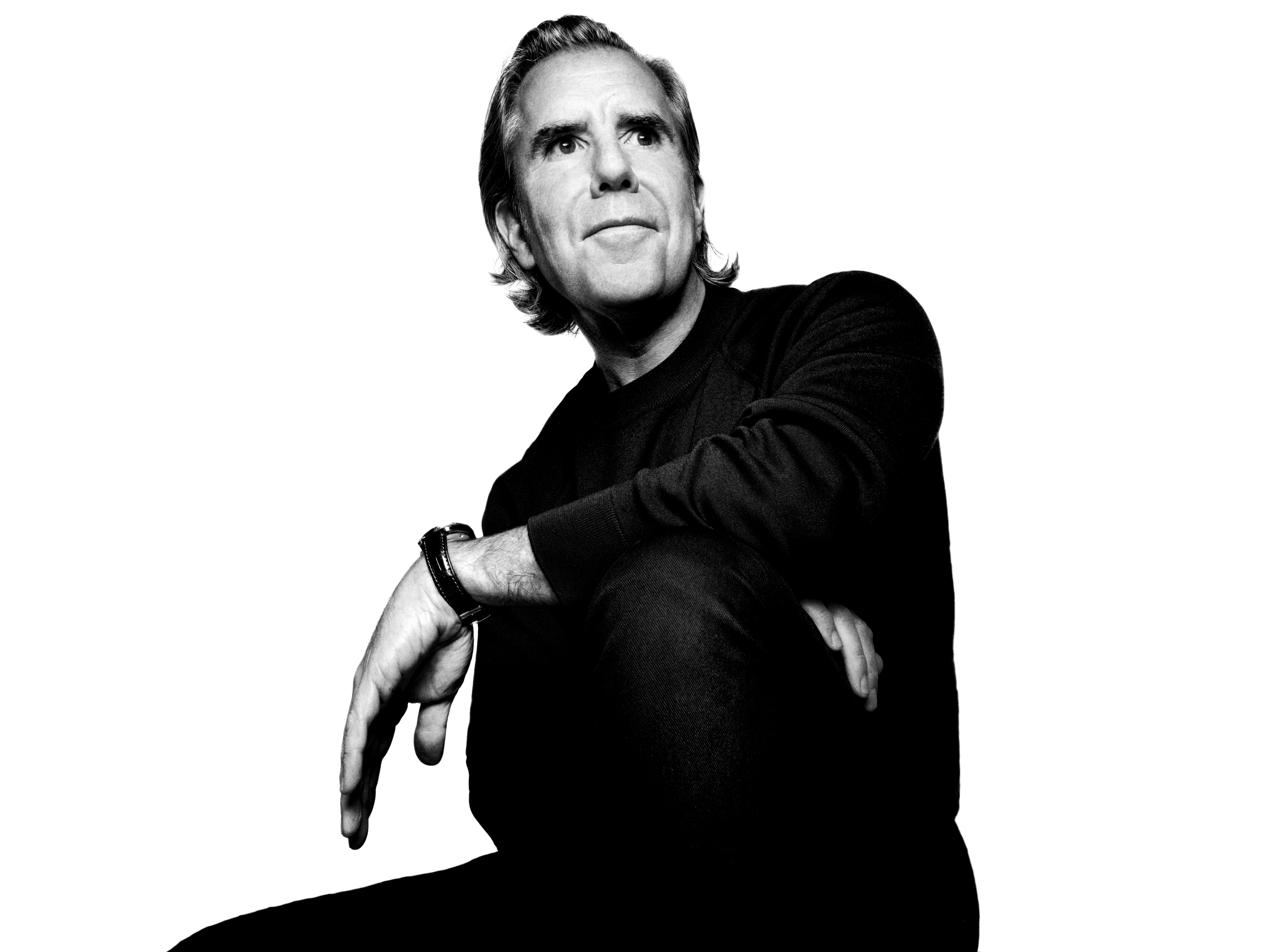
Scott Dadich
Few modern figures have shaped the intersection of design, technology, and narrative with the discipline or the imagination of Scott Dadich. A former magazine editor turned design entrepreneur, Dadich has spent the better part of three decades translating complexity into cultural clarity. In 2017, he co-founded Godfrey Dadich Partners (GDP), which became a go-to advisor for companies navigating brand transformation and cultural relevance. Over the years, GDP’s client list has included Apple, Netflix, Google, Sony, Microsoft, IBM, JPMorgan Chase & Co., Amazon, Nike, TED, Red Bull, Disney, and the Obama Foundation—names that speak to both the firm’s influence and Dadich’s standing as a trusted partner to leadership at the highest levels.
Dadich’s philosophy, known as The New Editorial, fuses journalistic rigor with brand strategy and design as a tool of strategic intent. It is equal parts newsroom and boardroom: a way of framing companies not merely as institutions, but as narratives in motion. The model earned him a reputation for helping executives find not only their voice, but their advantage.
Before his foray into consultancy, Dadich served as creative director of Texas Monthly and later as both creative director and editor-in-chief of Condé Nast’s WIRED, where he presided over a renaissance of the magazine’s digital presence and editorial ambition. During his tenure, WIRED received 21 National Magazine Award nominations and eight wins, including four National Magazine Awards for Design. It was under his watch that WIRED launched its first iPad edition and featured rare dual interviews he personally conducted with President Barack Obama, while in office, and Edward Snowden, in exile in Moscow—illuminating two poles of the modern privacy and power debate. In 2011, Fast Company named him one of the “50 Most Influential Designers in America,” and in 2020, he was awarded the National Design Award for Communication Design by the Cooper Hewitt, Smithsonian Design Museum—the field’s highest honor.
During his WIRED tenure, Dadich was also appointed vice president of editorial platforms at Condé Nast, where he led the company’s first integrated strategy across web, smartphone, and tablet publishing. He oversaw the development of digital products and responsive experiences for flagship titles including GQ, The New Yorker, Vanity Fair, and Vogue, advancing a new model of nonfiction storytelling that united design systems with emerging technologies. Apple was a key partner in this work—collaborations that would quietly help inform the launch of Apple News and News+, both of which debuted with WIRED and Condé Nast as featured launch partners. His leadership helped position the storied publishing house at the forefront of the internet era.
Beyond page and platform, Dadich has translated his narrative philosophy to the screen. Abstract: The Art of Design—the Emmy-nominated, 14-episode Netflix series he created and executive produced—spanned two seasons and won the prestigious International Documentary Award for Best Episodic Series in 2019. Profiling some of the world’s most innovative creators, Abstract cemented Dadich’s role as a cultural intermediary between industry and imagination—a translator of creative process, not just output. Recent documentary work includes a 2024 campaign film for Vice President Kamala Harris and a lyrical brand film for the chairman and CEO of Seiko, meditating on the nature of time and human creativity.
In 2020, Dadich established a scholarship endowment in design communication at Texas Tech University, supporting design students from underrepresented and financially constrained backgrounds. He remains actively involved with recipients on campus.
Dadich concluded his nine-year tenure as CEO of GDP in late 2025 and moved into the role of chairman. He is now a senior advisor to several ventures—particularly those operating at the intersection of narrative, AI, and creativity—and serves on the boards of The People’s Portfolio, advancing human rights through narrative storytelling, and the Bay Area Host Committee, uniting the region through sport in the lead-up to Super Bowl LX and the 2026 World Cup. As ever, his work lives between disciplines: design and diplomacy, product and prose, systems and stories.
Scott Dadich
Few modern figures have shaped the intersection of design, technology, and narrative with the discipline or the imagination of Scott Dadich. A former magazine editor turned design entrepreneur, Dadich has spent the better part of three decades translating complexity into cultural clarity. In 2017, he co-founded Godfrey Dadich Partners (GDP), which became a go-to advisor for companies navigating brand transformation and cultural relevance. Over the years, GDP’s client list has included Apple, Netflix, Google, Sony, Microsoft, IBM, JPMorgan Chase & Co., Amazon, Nike, TED, Red Bull, and the Obama Foundation—names that speak to both the firm’s influence and Dadich’s standing as a trusted partner to leadership at the highest levels.
Dadich’s philosophy, known as The New Editorial, fuses journalistic rigor with brand strategy and design as a tool of strategic intent. It is equal parts newsroom and boardroom: a way of framing companies not merely as institutions, but as narratives in motion. The model earned him a reputation for helping executives find not only their voice, but their advantage.
Before his foray into consultancy, Dadich served as creative director of Texas Monthly and later as both creative director and editor-in-chief of Condé Nast’s WIRED, where he presided over a renaissance of the magazine’s digital presence and editorial ambition. During his tenure, WIRED received 21 National Magazine Award nominations and eight wins, including four National Magazine Awards for Design. It was under his watch that WIRED launched its first iPad edition and featured rare dual interviews he personally conducted with President Barack Obama, while in office, and Edward Snowden, in exile in Moscow—illuminating two poles of the modern privacy and power debate. In 2011, Fast Company named him one of the “50 Most Influential Designers in America,” and in 2020, he was awarded the National Design Award for Communication Design by the Cooper Hewitt, Smithsonian Design Museum—the field’s highest honor.
During his WIRED tenure, Dadich was also appointed vice president of editorial platforms at Condé Nast, where he led the company’s first integrated strategy across web, smartphone, and tablet publishing. He oversaw the development of digital products and responsive experiences for flagship titles including GQ, The New Yorker, Vanity Fair, and Vogue, advancing a new model of nonfiction storytelling that united design systems with emerging technologies. Apple was a key partner in this work—collaborations that would quietly help inform the launch of Apple News and News+, both of which debuted with WIRED and Condé Nast as featured launch partners. His leadership helped position the storied publishing house at the forefront of the internet era.
Beyond page and platform, Dadich has translated his narrative philosophy to the screen. Abstract: The Art of Design—the Emmy-nominated, 14-episode Netflix series he created and executive produced—spanned two seasons and won the prestigious International Documentary Award for Best Episodic Series in 2019. Profiling some of the world’s most innovative creators, Abstract cemented Dadich’s role as a cultural intermediary between industry and imagination—a translator of creative process, not just output. Recent documentary work includes a 2024 campaign film for Vice President Kamala Harris and a lyrical brand film for the chairman and CEO of Seiko, meditating on the nature of time and human creativity.
In 2020, Dadich established a scholarship endowment in design communication at Texas Tech University, supporting design students from underrepresented and financially constrained backgrounds. He remains actively involved with recipients on campus.
Dadich concluded his nine-year tenure as CEO of GDP in late 2025 and moved into the role of chairman. He is now a senior advisor to several ventures—particularly those operating at the intersection of narrative, AI, and creativity—and serves on the boards of The People’s Portfolio, advancing human rights through narrative storytelling, and the Bay Area Host Committee, uniting the region through sport in the lead-up to Super Bowl LX and the 2026 World Cup. As ever, his work lives between disciplines: design and diplomacy, product and prose, systems and stories.